How to Assess Your Rivals in Charlotte's Growing Market
Understanding Your Competitive Landscape
Every business operates within a competitive environment, and knowing who you are up against is essential for making smart strategic decisions. A competitor analysis helps you see where your business stands, what your rivals do well, and where you can find opportunities to grow. For small and growing businesses in areas like Charlotte, NC, the ability to quickly identify market gaps and adjust your approach can make the difference between steady growth and stagnation.
This article walks through a practical checklist that you can use to evaluate your competition. The goal is not to copy what others do, but to understand the market dynamics so you can position your own business more effectively. Whether you run a local shop, a service company, or an online brand, the same principles apply.
Step One: Identify Who Your Real Competitors Are
Start by listing the businesses that compete for the same customers you want. This includes direct competitors who offer the same product or service, as well as indirect competitors who solve the same customer problem in a different way. For example, a local bakery competes with other bakeries, but also with grocery stores that sell bread and with coffee shops that offer pastries.
Use search engines and local directories to find businesses in your area. Look at online maps, review sites, and social media. The idea is to build a list of at least five to ten competitors that matter to your target audience.
Step Two: Analyze Their Online Presence
Once you have a list, visit each competitor's website and social media profiles. Pay attention to the following:
- How easy is the site to navigate? Is it mobile-friendly?
- What content do they publish? Blog posts, videos, customer stories?
- Do they have a clear call to action? Can visitors easily book, buy, or contact them?
Look at their search visibility. Search for terms that your customers would use to find your kind of business in Charlotte. See which competitors appear on the first page of results. This gives you a sense of who is investing in search engine optimization and who is not.
Step Three: Examine Their Pricing and Offers
Pricing signals tell you a lot about a competitor's strategy. Visit their pages and note the price range for products or services. Do they offer discounts, bundles, or loyalty programs? Are they positioned as a premium option or a budget-friendly choice?
Compare their pricing to yours. If they are cheaper, what value do you provide that justifies your price? If they are more expensive, what extra features or services do they offer that you might need to match or counter? Pricing is not just about numbers; it is about perceived value. Understanding where your competitors sit on that spectrum helps you refine your own messaging.
Step Four: Study Customer Reviews and Feedback
Customer reviews are a goldmine of information. Read reviews on Google, Yelp, and industry-specific sites. Look for patterns in what customers praise and what they complain about. Common complaints often point to weaknesses that you can exploit. For instance, if multiple reviewers say a competitor has slow customer service, you can highlight your own responsive support.
Web Rank Digital is also on Instagram.
Pay attention to how competitors respond to negative reviews. Do they engage professionally or ignore feedback? Their response style can reveal their attitude toward customer care. This insight helps you shape your own approach to service.
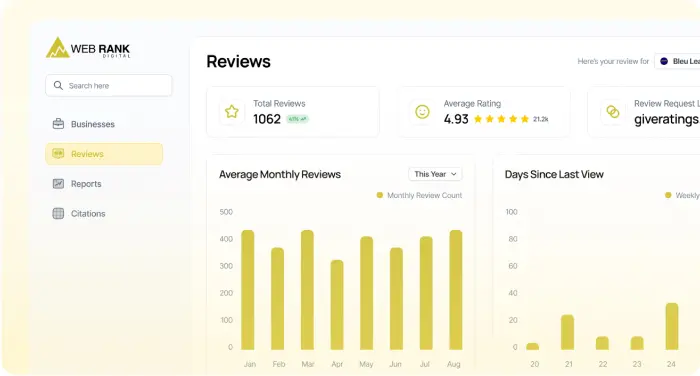
A tool like the customer growth platform offered by Web Rank Digital can help automate the process of gathering and analyzing competitor intelligence. Their system tracks market signals and provides real-time data so you can focus on strategy rather than manual research.
Step Five: Evaluate Their Unique Selling Points
Every competitor has something they emphasize. It might be a guarantee, a special feature, a location advantage, or a strong brand story. List each competitor's main selling point and ask yourself: Is this something that truly matters to customers? Can you offer something similar or better?
For example, if a competitor prides itself on free shipping, but you offer a faster delivery window, that could be a stronger advantage. The key is to identify what resonates with your target audience and then communicate it clearly in your own marketing.
Step Six: Assess Market Positioning and Service Gaps
Look at how competitors position themselves. Do they target a broad audience or a specific niche? Are they trying to be everything to everyone, or do they focus on a particular segment? Understanding their positioning helps you find gaps in the market. Maybe no one in Charlotte offers a combined service that your business could provide. Or perhaps there is an underserved customer group that competitors ignore.
Service gaps are opportunities. If you notice that local competitors lack a certain feature, have poor hours, or miss a demographic, that is where you can differentiate. Document these gaps and consider how your business can fill them.
Step Seven: Monitor Competitor Changes Over Time
Competitor analysis is not a one-time task. Markets shift, new businesses open, and existing ones change their strategies. Set up a simple system to monitor key competitors. Subscribe to their newsletters, follow them on social media, and check their websites periodically. Look for new product launches, rebranding, or changes in pricing.
Staying aware of these shifts allows you to react quickly. If a competitor drops a product line, their customers may need an alternative. If they raise prices, you can attract price-sensitive buyers. The more you watch, the more proactive you can be.
Putting It All Together
Once you have gathered information on your competitors, organize your findings. Create a simple table or document that lists each competitor, their strengths and weaknesses, their pricing, and any gaps you have identified. Use this as a reference when making decisions about your own marketing, product development, and customer service.
Remember that the goal is not to copy competitors, but to learn from the landscape. Use what you discover to refine your unique value proposition. If you find that most competitors are weak in customer support, invest in making yours exceptional. If they all focus on price, emphasize quality or convenience instead.
For businesses that want to streamline this process, a customer growth platform can integrate competitor research into your regular workflow. Web Rank Digital offers such a system, and their team can explain how it works during a demo. You can reach them at 401 s Graham st Charlotte NC 28202, or call +1 877-726-5871 to learn more.